.jpg)
Coast note 03 · competition, beach courts, and clear roles
U.S. Open surf and a beach-volleyball culture in public view
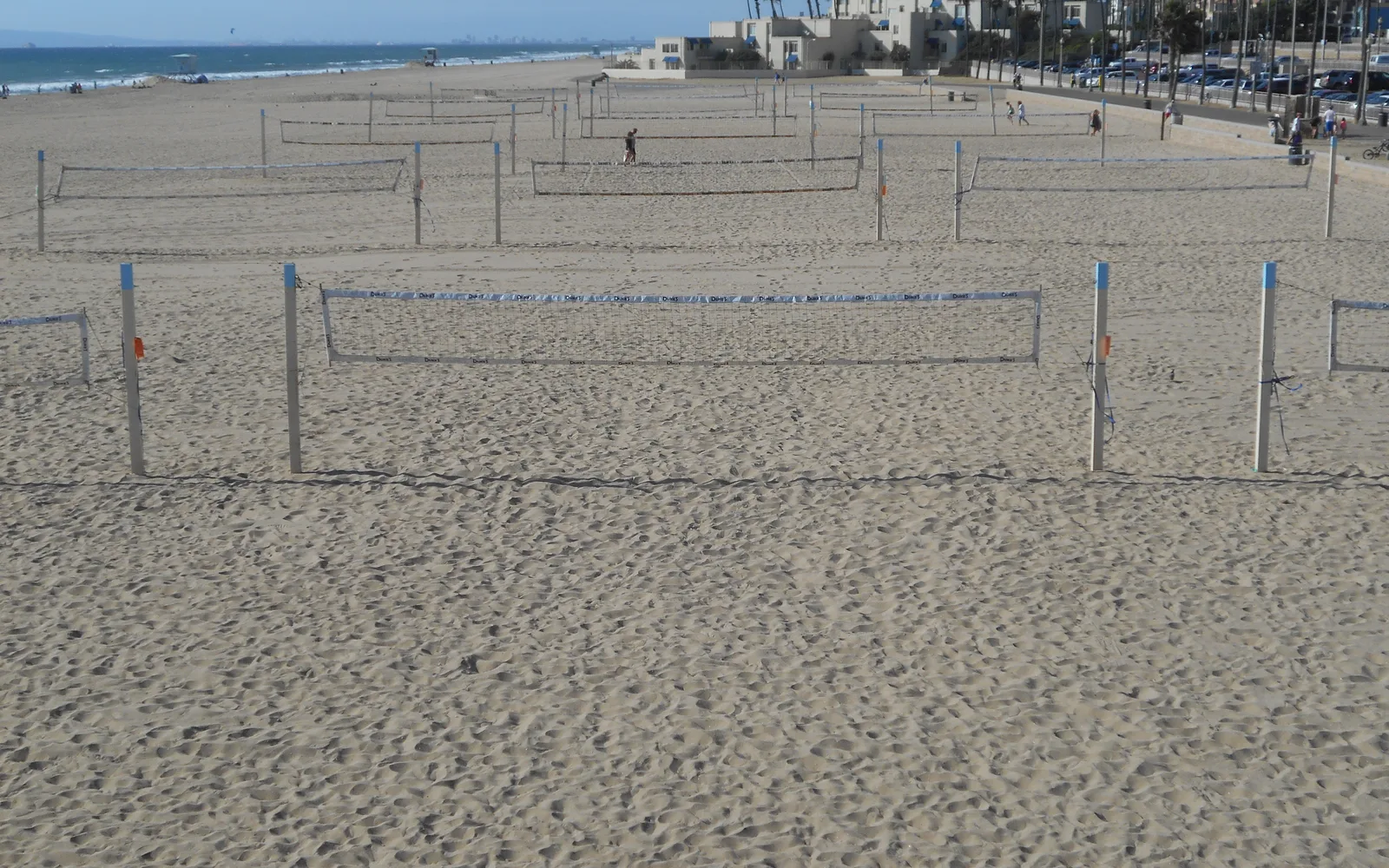
The U.S. Open of Surfing identifies its Huntington Beach footprint south of the pier and describes a program built around elite surfing with additional beach events. California State Parks connects Huntington State Beach with a paved oceanfront trail and the city's long competitive-surf identity. Rows of sand volleyball courts sit in that same public coastal setting. The principal photograph shows those Huntington Beach courts beside the ocean; it is not a tournament or U.S. Open action photograph.
Surf competition and beach volleyball share visible features—athletes, spectators, equipment, organizers, sponsors, vendors, and public space—but those roles are not interchangeable. A person attending, volunteering, coaching, selling, filming, or competing may present different facts. Insurance questions become clearer only after identifying who organized an activity, who was paid, who owned the gear, which premises or vehicles were involved, and what written agreement applied.
Start with the role, not the event name
A household outing with personal boards or volleyball equipment is different from paid instruction, equipment rental, tournament management, branded content, or a sponsored appearance. List the participants, compensation, customers, products, advice, transportation, storage, contractors, and employees. Ask whether personal liability, property, auto, watercraft, business, professional, cyber, or workers compensation forms address those exact facts. A familiar beach setting does not turn commercial work into a personal-policy activity.
For an organized event, retain the registration terms, permit information, vendor agreement, certificate request, waiver, and incident instructions. Certificates and contracts may document obligations, but they do not create coverage beyond an issued policy. Qualified counsel may be needed for indemnity or release language. Confirm required insured names, underlying limits, territories, athletic or participant exclusions, and the method for reporting an incident before relying on a flyer or verbal assurance.
Treat shared beach space as a responsibility map
Courts, surf zones, paths, parking, and temporary event areas can place several users near one another. Record transportation, equipment ownership, supervision, emergency contacts, and any volunteer or vendor duty. Follow current event and agency rules, posted closures, lifeguard direction, and public-safety guidance. Those operational steps help people prepare; they do not decide fault or guarantee that an insurer will defend or pay.
Bolsa Chica remains an important protected coastal neighbor north of this event-centered scene. California wildlife officials describe its ecological reserve and public trail network, where habitat rules and access boundaries differ from tournament space. That supplemental context reinforces a narrow point: each location and role has defined limits. Public recreation, surf history, and ecological identity do not determine a resident's eligibility, premium, or claim. Current individual facts, insurer rules, and the issued policies and endorsements control.
The issued policies and endorsements control.